Fake peptides currently account for over 95% in the market.
These fakes typically contain only additives such as mannitol and small amounts of glucose; they have simple compositions and low production costs.
Assessing the authenticity of lyophilized peptide products for research purposes is not fundamentally about whether the “vial looks right,” but rather about verifying:
The reliability of the source, the standardization of production, the validity of testing, and the confirmation of molecular identity.
Visual appearance serves only as a preliminary screen; the true determinants of quality are:
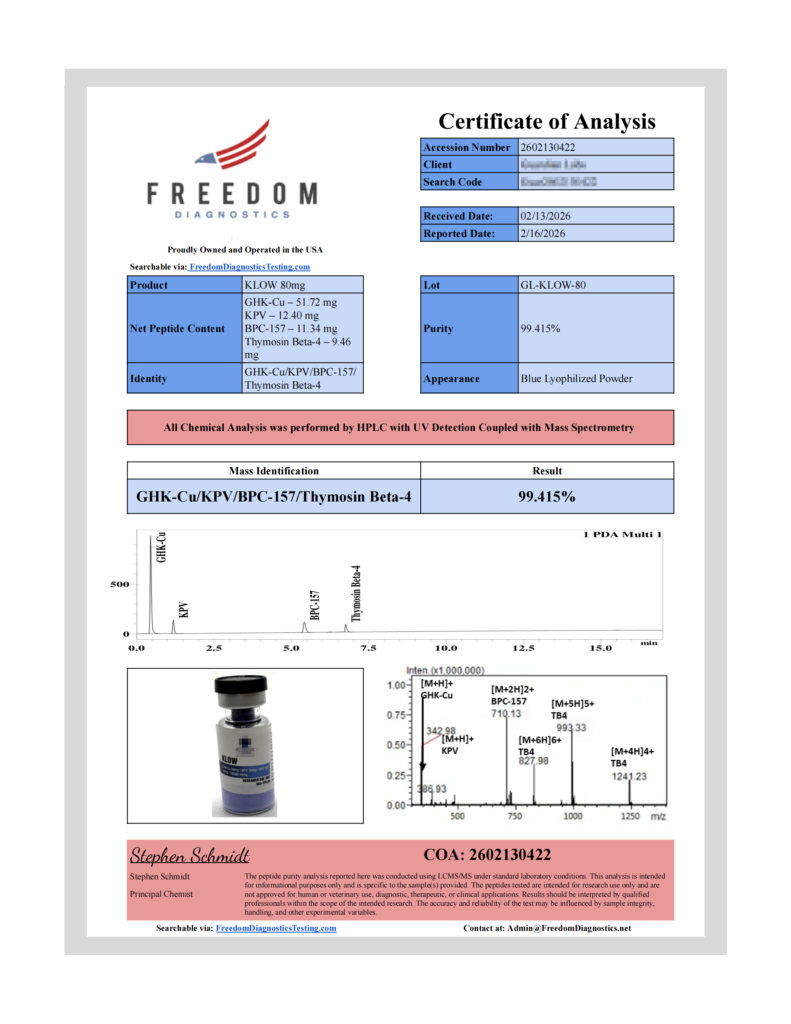
HPLC purity + LC-MS identity confirmation + a comprehensive quality system.
Our factory will provide raw material test reports. We also recommend that you have secondary testing performed by a third-party testing agency, such as
FreedomDiagnosticsTesting.com.